Table of Contents
- What is oregano oil?
- How carvacrol and thymol support a healthy gut microbial environment
- Oregano oil as part of a multi-compound botanical gut support formula
- What to look for in an oregano oil supplement
- How oregano oil fits into the Priority One SIBO Protocol
- Important guidance before starting any botanical gut health protocol
- Summary
- FAQs
Among the botanical compounds used in gut health protocols, oregano oil for sibo is one of the most extensively studied — and one of the most misunderstood. Walk into any health food store and you will find oregano oil products ranging from culinary herb extracts to high-potency standardized concentrates, with widely varying carvacrol percentages, carrier oils, and serving sizes. For anyone supporting gut health with a practitioner-guided SIBO protocol, understanding what makes oregano oil effective — and what to look for on a supplement label — is genuinely valuable.*
This article is for educational purposes only and does not constitute medical advice. Always consult your licensed healthcare practitioner before beginning any supplement protocol.
What is oregano oil?
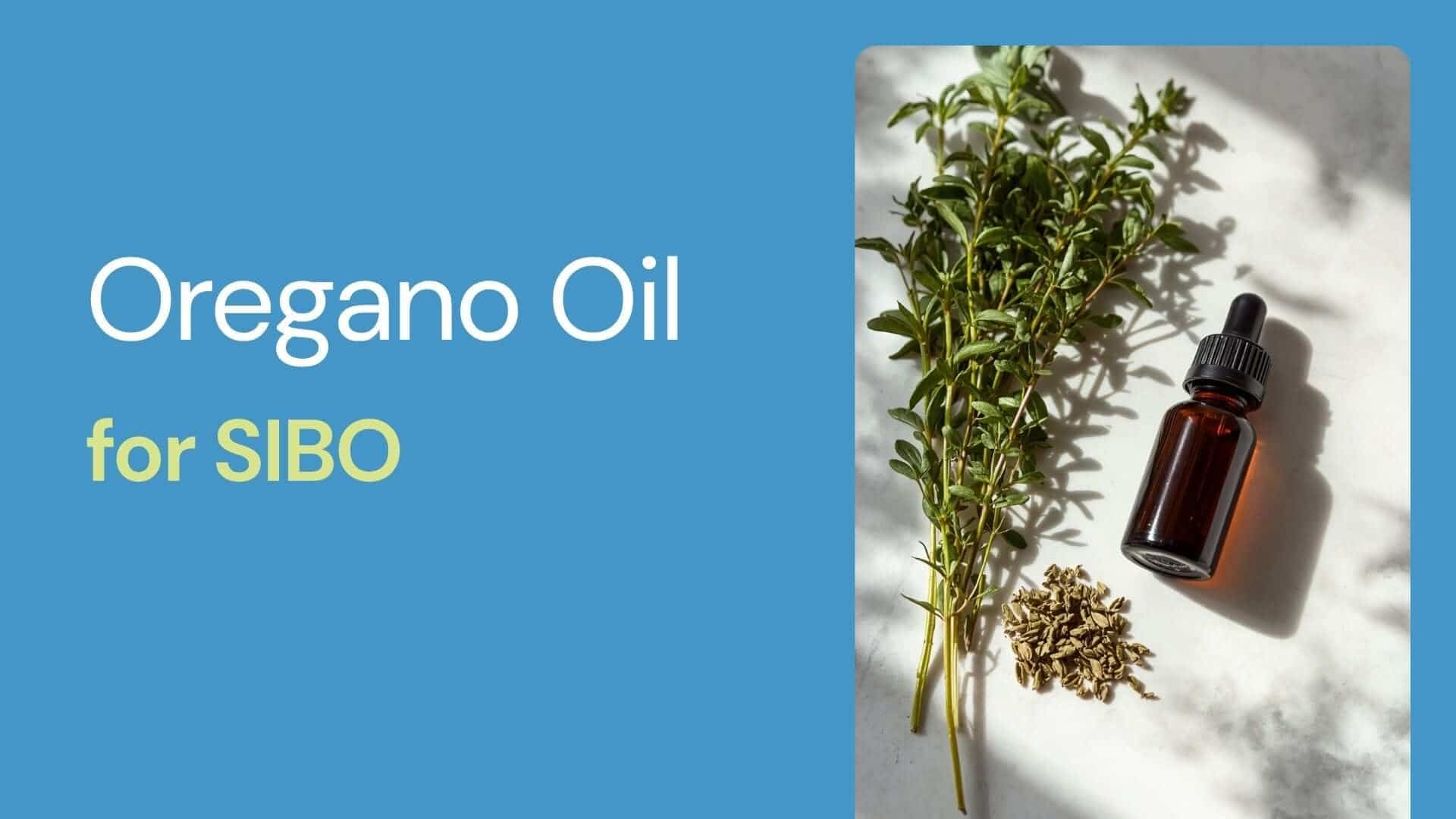
Oregano oil is the essential oil distilled from Origanum vulgare — a Mediterranean herb with a long history of traditional use. Its botanical activity is primarily attributed to two phenolic monoterpenoid compounds: carvacrol and thymol.
In a well-standardized oregano oil supplement, carvacrol typically comprises 60–80% of the total composition, with thymol contributing an additional 2–10%. The remainder consists of p-cymene, gamma-terpinene, and other minor monoterpenes — compounds that contribute synergistically to the overall activity of the formula.*
SIBO is characterized by an imbalance of microbial populations in the small intestine. Supporting a balanced gut microbial environment is the central purpose of the botanical compounds used in Stage 1 of the Priority One SIBO Protocol — and oregano oil, through its active compounds, is one of the most well-researched botanical ingredients for this purpose.*
How carvacrol and thymol support a healthy gut microbial environment
Carvacrol and thymol are lipophilic — they dissolve in and readily interact with the phospholipid bilayers that form microbial cell membranes. Published in vitro research has examined two primary mechanisms through which these compounds interact with microbial cells.*
Interaction with the proton motive force
Microbial cells maintain an electrochemical gradient across their membranes — the proton motive force — that supports ATP synthesis and normal cellular function. In vitro research has shown that carvacrol interacts with membranes in ways that affect proton flux, influencing this gradient. Published laboratory studies have explored how this membrane interaction contributes to carvacrol's broad-spectrum activity against multiple microbial species.*
Membrane interaction and ion permeability
Published in vitro studies have also examined how carvacrol and thymol affect membrane permeability to potassium and other ions. This membrane interaction is one of the mechanisms researchers have proposed to explain the broad-spectrum activity of these compounds against gram-positive bacteria, gram-negative bacteria, and Candida species in laboratory settings.*
What the research shows
The published literature on oregano oil and carvacrol as gut health botanical compounds is substantial, though it is important to understand its scope and limitations:
- Multiple in vitro studies have examined carvacrol's activity against Escherichia coli, Klebsiella pneumoniae, Staphylococcus aureus, and Enterococcus faecalis — microbial species commonly studied in the context of gut health.*
- In vitro research has explored the synergistic relationship between carvacrol and thymol — the combination has shown greater activity than either compound alone at equivalent concentrations in laboratory settings.*
- A 2011 study published in the Journal of Medicinal Food examined emulsified oregano oil in a human study involving participants with intestinal microbial imbalance. Participants reported improvements in digestive comfort over a 6-week period.* Note: this was a small, uncontrolled study; these findings are not necessarily representative of results in a broader population and do not constitute evidence of disease treatment.
- The majority of oregano oil research is in vitro (laboratory-based). Rigorous, large-scale randomized controlled trials in human subjects are limited. The use of oregano oil in gut health protocols is based on in vitro evidence, mechanistic research, and practitioner clinical experience.*
Oregano oil as part of a multi-compound botanical gut support formula
An important principle in practitioner-guided botanical gut health protocols is using multiple compounds with distinct and complementary mechanisms — rather than relying on a single ingredient. This multi-compound approach is the design philosophy behind Dr. Mona Morstein ND's SIBOtic™ — the Stage 1 botanical support component of the Priority One SIBO Protocol.*
SIBOtic- Ingredientes que equilibran las bacterias*
$87.50
SIBOtic es una formulación única de la Dra. Mona Morstein que contiene una colección completa y dosificada terapéuticamente de ingredientes que equilibran las bacterias en un solo producto. Diseñado para pacientes que prefieren una alternativa botánica de alta potencia. Paso… read more

SIBOtic™ combines oregano oil with three additional botanical ingredients, each with a distinct proposed mechanism of action based on published research:
| Ingredient | Amount per serving | Primary proposed mechanism (in vitro / published research) | Notable research focus |
|---|---|---|---|
| Garlic Bulb Extract 1% Allicin | 1,500mg | Thiol enzyme interaction — allicin has been studied for its interaction with thiol-containing microbial enzymes via its thiosulfate group | In vitro activity across gram-positive, gram-negative bacteria, and archaea; including Methanobrevibacter smithii species studied in methane-associated gut profiles |
| Berberine HCl 97% | 500mg | DNA intercalation and FtsZ interaction — published research has examined berberine's interaction with bacterial DNA replication and cell division protein FtsZ | One of the most extensively published botanical compounds for gut microbial balance support; human studies have examined its role in supporting healthy gut ecology* |
| Caprylic Acid | 300mg | Membrane phospholipid interaction — medium-chain fatty acid studied for its interaction with microbial membrane phospholipid bilayers | In vitro activity against Candida species; commonly studied alongside oregano oil for synergistic membrane-level activity* |
| Oregano Leaf Oil | 300mg | Membrane permeability interaction via carvacrol and thymol — as described above | Broad-spectrum in vitro activity; synergistic with caprylic acid in membrane interaction studies* |
What to look for in an oregano oil supplement
Not all oregano oil products are equivalent. Here is what to evaluate when choosing a practitioner-grade oregano oil supplement:
Carvacrol standardization percentage
This is the most important specification. Carvacrol content varies widely depending on harvest timing, growing region, and distillation method. Products that list only "oregano leaf oil" without a stated carvacrol percentage cannot be accurately assessed for potency. For gut health protocols, look for oregano oil standardized to a minimum of 60% carvacrol.*
Species — Origanum vulgare
There are over 40 species in the Origanum genus, with significant variation in carvacrol content. Origanum vulgare subsp. hirtum (Greek oregano) from Mediterranean growing regions — particularly Turkey, Greece, and southern Spain — is the standard for practitioner-grade botanical formulations and has the most consistent carvacrol profiles in the published literature.*
Serving amount
Many culinary oregano oil products provide 25–50mg per capsule — amounts appropriate for general wellness but well below the amounts used in practitioner-designed gut health formulas. Practitioner-grade formulas typically use oregano oil at 150–400mg per serving. SIBOtic™ provides 300mg of standardized oregano leaf oil per serving as part of its four-compound botanical formula. Your healthcare practitioner will guide you on the appropriate serving for your individual protocol.*
Delivery format
For gut health applications targeting the small intestine, capsule delivery is generally preferred over liquid drops. Vegetarian capsules deliver the botanical compound to the small intestine rather than allowing early absorption in the upper GI tract. SIBOtic™ uses vegetarian capsules formulated to deliver its botanical complex to the small intestine.*
What it is combined with
Oregano oil is most commonly used in gut health protocols as part of a multi-compound formula. When evaluating a product, consider whether it includes complementary botanical ingredients — such as berberine, allicin, or caprylic acid — with distinct supporting mechanisms.*
Manufacturing standards
Look for GMP (Good Manufacturing Practice) certification and third-party testing for purity and potency. Priority One Nutritional Supplements is an FDA 21 CFR Part 111 and NSF/ANSI 455-2 certified company — every batch of SIBOtic™ is third-party tested for purity and potency before release.
How oregano oil fits into the Priority One SIBO Protocol
Stage 1 — Active botanical support phase (SIBOtic™)
Oregano oil via SIBOtic™ is used during Stage 1 — the active botanical support phase — taken with meals at the serving amount directed by your healthcare practitioner. This stage typically runs concurrently with the strictest low-FODMAP dietary approach, Biofilm Phase-2 Advanced to support a healthy gut environment, and SIBOZyme™ digestive enzyme support at every meal.* Your practitioner will guide you on duration.*
Stage 2 — Motility support phase (SIBO-MMC™)
After completing Stage 1, the protocol shifts to supporting normal intestinal motility. SIBO-MMC™ — containing P-5-P Active B6, 5-HTP, Ginger, and Jujube — supports normal MMC function, which contributes to healthy gut transit and a balanced gut environment.* SIBOZyme™ continues with every meal.*
Stage 3 — Gut rebuilding phase (SIBO-Rebuild™ + Tributyrin Advanced)
The third phase focuses on supporting gut integrity and a healthy microbiome. SIBO-Rebuild™ provides L-Glutamine, Acetyl L-Carnitine, Lion's Mane, and Zinc to support normal intestinal mucosal integrity and enteric nervous system health.* Tributyrin Advanced supports gut barrier integrity and microbiome rebuilding.* All stages include SIBOZyme™ with every meal.*
SIBOZyme: apoya la digestión saludable en pacientes que buscan el equilibrio bacteriano del intestino delgado.* - Formulación exclusiva de la Dra. Mona Morstein
$110.00
Mejore la digestión y equilibre la salud intestinal con soporte bacteriano del intestino delgado. Paso 2: Una dosis típica sugerida por el Dr. Morstein es de 1 a 2 cápsulas con las comidas, 3 veces al día. Ingredientes Clorhidrato de… read more

Important guidance before starting any botanical gut health protocol
- Always use under healthcare provider supervision. SIBOtic™ is a high-potency botanical formula designed for use as part of a structured gut health protocol under the guidance of a licensed healthcare practitioner. It is not intended for unsupervised self-use.*
- Some individuals experience a digestive adjustment period. When beginning a new botanical gut health protocol, some individuals notice temporary digestive changes during the initial period. Starting at a lower serving size and increasing gradually under practitioner guidance is a common approach.*
- Inform your healthcare provider of all supplements. Oregano oil and berberine (both in SIBOtic™) may interact with certain medications. Always inform your prescribing physician of all supplements you are taking, particularly if you are on blood thinners or diabetes medications.*
- Not for use during pregnancy or breastfeeding. High-potency oregano oil is not recommended during pregnancy or breastfeeding. Consult your healthcare provider.*
- Consult your healthcare provider before beginning any supplement protocol. A thorough health assessment by a qualified practitioner is the appropriate starting point for any gut health supplement protocol.*
Summary
Oregano oil — through its primary active compounds carvacrol and thymol — has been studied extensively in vitro for its interactions with microbial cell membranes. Its broad-spectrum activity in laboratory settings, lack of established resistance mechanisms, and published synergy with caprylic acid make it a well-studied component of multi-compound botanical gut health formulas.*
The key variables that determine supplement quality are carvacrol standardization percentage, serving amount, species sourcing, delivery format, and — most importantly — the complementary compounds it is combined with. A standalone culinary-grade oregano oil product differs significantly from a practitioner-formulated, multi-compound botanical formula used as part of a structured protocol under professional supervision.*
If you are working through the Priority One SIBO Protocol, SIBOtic™ provides 300mg of standardized oregano leaf oil alongside 1,500mg Garlic Allicin, 500mg Berberine HCl 97%, and 300mg Caprylic Acid — formulated by Dr. Mona Morstein ND as the Stage 1 botanical support component of a comprehensive gut health protocol.*
SIBOtic™ is available individually or as part of the SIBO Support Bundle in our SIBO Protocol collection.
*These statements have not been evaluated by the Food and Drug Administration. These products are not intended to diagnose, treat, cure, or prevent any disease. This article is for educational purposes only and does not constitute medical advice. The information presented is based on published research and is not intended as clinical guidance. Always consult your licensed healthcare practitioner before beginning any supplement protocol, particularly if you have a diagnosed medical condition, are pregnant or breastfeeding, or are taking prescription medications. Priority One Nutritional Supplements is an FDA 21 CFR Part 111 and NSF/ANSI 455-2 certified company.
FAQs
Does oregano oil kill good bacteria too?
Like all broad-spectrum antimicrobials — including pharmaceutical antibiotics — oregano oil does not selectively kill only SIBO-associated organisms. This is one reason why the intestinal repair phase (Stage 3 with SIBO-Rebuild™ and Tributyrin Advanced) is an important part of a complete SIBO protocol — rebuilding the gut microbiome after antimicrobial treatment is just as important as the eradication phase itself. Working with a healthcare practitioner to time the antimicrobial phase correctly minimizes collateral disruption to the beneficial microbiome.*
How long should I take oregano oil for SIBO
The duration of the antimicrobial phase varies depending on the severity and type of SIBO, individual response, and your practitioner's protocol. Most botanical SIBO protocols run for 4–8 weeks of active antimicrobial treatment before transitioning to the motility support phase. Your healthcare provider is the best person to determine the appropriate duration based on your test results and symptom response.*
Can I take oregano oil for SIBO without a diagnosis?
We recommend confirming a SIBO diagnosis with lactulose or glucose breath testing before beginning antimicrobial treatment. Many conditions produce SIBO-like symptoms — IBS, IBD, food intolerances, motility disorders — and treating presumed SIBO without a diagnosis can delay proper treatment of an underlying condition. Consult a licensed healthcare provider for testing and diagnosis.*
Is oregano oil in SIBOtic™ the same as culinary oregano oil?
No. SIBOtic™ uses pharmaceutical-grade oregano leaf oil from Origanum vulgare standardized to a consistent carvacrol percentage — manufactured under GMP conditions, third-party tested, and dosed at a therapeutic level (300mg per serving) designed for clinical antimicrobial activity. Culinary oregano oil products are typically unstandardized, much lower in carvacrol content, and dosed at levels appropriate for flavoring food rather than antimicrobial treatment.*
What is the best supplement protocol for SIBO?
The Priority One SIBO Protocol — developed by Dr. Mona Morstein ND — uses a four-stage approach: Stage 1 (SIBOtic™ — antimicrobial eradication), Stage 2 (SIBO-MMC™ — motility support and recurrence prevention), Stage 3 (SIBO-Rebuild™ — intestinal repair), with SIBOZyme™ digestive enzymes used throughout all stages. Additional protocol support includes Biofilm Phase-2 Advanced and Tributyrin Advanced.