Table of Contents
If you or someone you know is working with a healthcare provider on gut health concerns involving Small Intestinal Bacterial Overgrowth (SIBO), dietary choices can play a meaningful role in supporting the overall wellness protocol. This guide is designed to complement the Priority One SIBO Protocol — developed under the clinical guidance of Dr. Mona Morstein, ND — by helping you understand which foods may support a healthy gut environment and which are best minimised.*
This article is for educational purposes only and does not constitute medical advice. Always follow the specific dietary and supplement guidance provided by your licensed healthcare practitioner before making any changes to your diet or supplement regimen.
Understanding SIBO and the role of diet
SIBO is characterised by an imbalance of microbial populations in the small intestine. Certain dietary patterns — particularly those high in rapidly fermentable carbohydrates — may contribute to an environment that supports unwanted microbial activity, while other dietary approaches may help create a more balanced gut environment.*
Diet is considered an important complementary component of gut health support for two reasons. First, the types of carbohydrates consumed influence the fermentable substrate available in the small intestine. Second, eating habits such as meal spacing may support the Migrating Motor Complex (MMC) — the normal intestinal motility mechanism that helps maintain gut health between meals. Understanding both dimensions may help you get the most from your Priority One supplement protocol when used under practitioner supervision.*
The Priority One SIBO Protocol — a brief overview
Before discussing dietary choices, here is a brief overview of the supplement protocol these food choices are designed to complement:
- Stage 1 — SIBOtic™: A four-compound botanical complex (Garlic 1% Allicin, Berberine HCl 97%, Caprylic Acid, Oregano Oil) formulated to support a balanced gut microbial environment.*
- Stage 2 — SIBO-MMC™: Supports normal intestinal motility and MMC function. Contains P-5-P Active B6, 5-HTP 98%, Ginger 5% Gingerols, and Jujube.*
- Stage 3 — SIBO-Rebuild™: Supports normal intestinal mucosal integrity and enteric nervous system health. Contains L-Glutamine, Acetyl L-Carnitine, Lion's Mane, and Zinc.*
- All Stages — SIBOZyme™: Supports normal digestive enzyme activity and healthy bile acid function. Intended for use with every meal throughout the protocol. Contains Pancreatin 8X, Ox Bile 300mg, Tolerase-G®, Lactase, and Betaine HCl.*
- Add-On — Biofilm Phase-2 Advanced: Physician-formulated botanical and enzyme complex supporting a healthy gut microbial environment.*
- Add-On — Para Clean™: Six botanical extracts (Olive Leaf, Black Walnut, Sweet Wormwood, Clove, Fig, Oregano) supporting normal gut microbial balance and healthy intestinal cleansing.*
- Rebuild — Tributyrin Advanced: CoreBiome® Tributyrin, BeautyOLIGO® GOS, and ImmunoLin® Immunoglobulin supporting gut barrier integrity and a healthy gut microbiome.*
You can find all of these products in our SIBO Protocol collection, or purchase them together as the SIBO Support Bundle.
The dietary foundation: low-FODMAP, low-fermentation eating
The dietary approach generally recommended alongside SIBO-focused gut health protocols is a low-FODMAP, low-fermentation eating pattern. FODMAP stands for Fermentable Oligosaccharides, Disaccharides, Monosaccharides, and Polyols — short-chain carbohydrates that are readily fermented by gut bacteria.
Reducing fermentable carbohydrate intake during the Stage 1 support phase may help create a less hospitable environment for unwanted gut microorganisms while your SIBOtic™ botanical complex supports normal microbial balance.* As you progress through the later motility and gut-rebuilding stages, dietary flexibility generally increases — always under the guidance of your healthcare practitioner.
What to eat and what to minimise
Proteins
| ✓ Proteins to enjoy | ✗ Proteins to minimise |
|---|---|
| Chicken, turkey, duck (plain, unmarinated) | Processed meats (hot dogs, deli meats with fillers or additives) |
| Grass-fed beef, bison, lamb | Beans and legumes (chickpeas, lentils, kidney beans) — high fermentable content |
| Wild-caught salmon, sardines, cod, halibut | Sausage with high-FODMAP spices or cereal fillers |
| Eggs (well-tolerated by most individuals) | Marinated or pre-seasoned meats |
| Canned tuna in water (no additives) | Protein powders containing inulin, FOS, or chicory root |
Vegetables
| ✓ Vegetables to enjoy | ✗ Vegetables to minimise |
|---|---|
| Zucchini, yellow squash | Garlic and onion — in any form, raw or cooked (high fructan content) |
| Spinach, kale (cooked) | Broccoli, cauliflower, Brussels sprouts (high fermentable content) |
| Green beans, bok choy | Asparagus, artichokes |
| Bell peppers (red, orange, yellow) | Mushrooms, beets, celery (large amounts) |
| Cucumber (peeled), eggplant, tomatoes (small amounts) | Cabbage (large amounts), leeks, sugar snap peas |
| Chives and green onion tops (green part only) | Garlic powder or onion powder in any seasoning blend |
Grains and starches
| ✓ Grains and starches to enjoy | ✗ Grains and starches to minimise |
|---|---|
| White rice, basmati rice | Wheat, rye, barley (high fructan content) |
| Quinoa (rinsed, small portions) | Whole wheat bread, pasta, cereal |
| Gluten-free oats (well-cooked, small amounts) | Chickpea or lentil-based pasta |
| Sweet potato (1/2 cup or less) | Corn (high sugar content, readily fermentable) |
| Tapioca, arrowroot, plain rice cakes | Bread with added inulin or chicory root |
| Boiled or baked potatoes (no skin) | High-fibre cereals and granola |
Fruits
| ✓ Fruits to enjoy | ✗ Fruits to minimise |
|---|---|
| Blueberries (up to 1/4 cup) | Apples, pears, peaches, plums, cherries (high sorbitol/fructose) |
| Strawberries (up to 5 medium) | Mango, watermelon (high fructose content) |
| Kiwi (1 medium) | Dried fruit of any kind (concentrated sugars) |
| Oranges and mandarin oranges (1 medium) | Canned fruit in juice or syrup |
| Grapes (up to 1/2 cup), fresh pineapple (small portion) | Fruit juices and high-FODMAP smoothies |
| Unripe banana (lower in fermentable starch) | Avocado (more than 1/8 of a fruit) |
Dairy and alternatives
| ✓ Dairy and alternatives to enjoy | ✗ Dairy and alternatives to minimise |
|---|---|
| Lactose-free milk and plain lactose-free yogurt | Regular cow's milk (contains lactose) |
| Hard aged cheeses (cheddar, parmesan, Swiss) | Ice cream and frozen yogurt |
| Butter and ghee | Oat milk (high in fermentable carbohydrates) |
| Almond milk (unsweetened, no carrageenan) | Yogurt with added inulin, FOS, or live cultures (during Stage 1) |
| Rice milk (unsweetened) | Kefir and other fermented dairy beverages (during Stage 1) |
Fats, oils, and condiments
| ✓ Fats and condiments to enjoy | ✗ Fats and condiments to minimise |
|---|---|
| Extra virgin olive oil, avocado oil, coconut oil, ghee | Highly processed vegetable oils (canola, soybean, corn) |
| Tamari/gluten-free soy sauce (small amounts) | Garlic- or onion-infused oils |
| Apple cider vinegar (small amounts in dressings) | Commercial salad dressings (typically contain garlic/onion derivatives) |
| Fresh herbs: basil, thyme, rosemary, oregano | Ketchup, BBQ sauce, teriyaki sauce |
| Pure maple syrup (very small amounts) | Honey, agave, high-fructose corn syrup |
| Table sugar (very small amounts) | Sugar alcohols: xylitol, sorbitol, mannitol, erythritol |
Beverages
| ✓ Beverages to enjoy | ✗ Beverages to minimise |
|---|---|
| Filtered water (your primary beverage) | Alcohol of all types |
| Herbal teas: peppermint, ginger, chamomile | Kombucha and other fermented beverages (during Stage 1) |
| Black coffee (small amounts, if personally tolerated) | Soda and sweetened drinks |
| Green tea | High-fructose corn syrup beverages |
| Bone broth (homemade, low-sodium, no onion or garlic) | Chicory root coffee alternatives |
| Plain sparkling water (no added flavouring) | Sweetened protein shakes with inulin or FOS |
7-day sample meal plan
All meals below follow low-FODMAP, low-fermentation principles. Take SIBOZyme™ at the start of every meal as directed by your healthcare practitioner throughout all stages of the protocol.* Aim for 3 structured meals per day. Do not eat within 3 hours of bedtime. Always consult your practitioner before making significant dietary changes.
Day 1 — Monday
- Breakfast: Scrambled eggs with sautéed spinach and zucchini in olive oil, served with white rice. Ginger herbal tea.
- Lunch: Grilled chicken breast over mixed greens with cucumber, red bell pepper, olive oil and fresh lemon dressing.
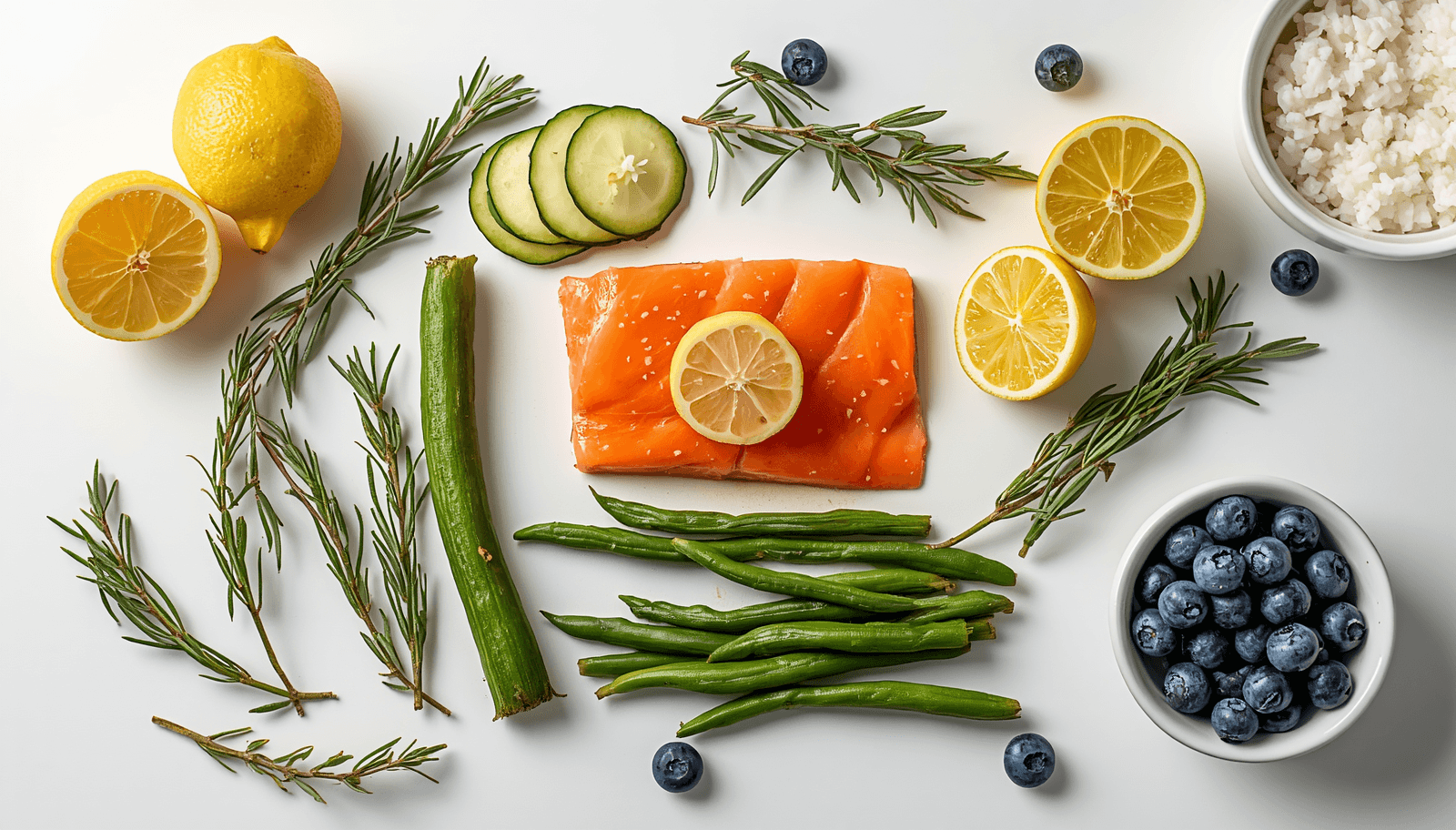
- Dinner: Baked wild-caught salmon with roasted green beans and basmati rice. Seasoned with fresh herbs, lemon, and olive oil.
- Snack (if needed): 5 strawberries with a small handful of macadamia nuts.
Day 2 — Tuesday
- Breakfast: Gluten-free oats (cooked) with fresh blueberries and a light drizzle of maple syrup. Black coffee or peppermint tea.
- Lunch: Turkey lettuce wraps with shredded carrots, cucumber, and a ginger-tamari dipping sauce (gluten-free tamari, sesame oil, fresh ginger).
- Dinner: Grass-fed ground beef stir-fry with bok choy, green onion tops, and white rice. Seasoned with ginger and gluten-free tamari.
- Snack (if needed): Rice cakes with a thin spread of plain almond butter (no added honey).
Day 3 — Wednesday
- Breakfast: Two fried eggs over sautéed kale, served with boiled potatoes. Chamomile or green tea.
- Lunch: Tuna salad (canned tuna, olive oil mayo, fresh lemon, chives) on gluten-free rice crackers. Side of sliced cucumber.
- Dinner: Roasted chicken thighs with baked sweet potato (1/2 cup) and roasted zucchini with olive oil and rosemary.
- Snack (if needed): 1 kiwi fruit.
Day 4 — Thursday
- Breakfast: Quinoa breakfast bowl with blueberries, a drizzle of maple syrup, and a soft-boiled egg on the side.
- Lunch: Bone broth soup with shredded chicken, carrots, green beans, and fresh thyme. White rice on the side.
- Dinner: Pan-seared cod with steamed bok choy, green onion tops, and basmati rice. Finished with lemon and olive oil.
- Snack (if needed): Small bunch of grapes (up to 1/2 cup).
Day 5 — Friday
- Breakfast: Baked vegetable frittata: eggs, spinach, red bell pepper, and zucchini. Slice and serve with herbal tea.
- Lunch: Grilled salmon over arugula and spinach with cherry tomatoes, cucumber, olive oil, and apple cider vinegar dressing.
- Dinner: Lamb chops with roasted eggplant, sautéed green beans, and a side of basmati rice with fresh herbs.
- Snack (if needed): Plain lactose-free yogurt with a few strawberries — check label to confirm no inulin or FOS added.
Day 6 — Saturday
- Breakfast: Smoked salmon with scrambled eggs, chives, and plain rice cakes. Sparkling water with fresh lemon.
- Lunch: Grilled chicken and vegetable skewers (zucchini, bell peppers, green onion tops) served over white rice.
- Dinner: Bison burger (no bun) over a bed of greens with tomato, cucumber, and olive oil dressing. Side of roasted sweet potato.
- Snack (if needed): 1 mandarin orange with a small handful of macadamia nuts.
Day 7 — Sunday
- Breakfast: Rice congee (rice cooked slowly in bone broth) with a soft egg and fresh ginger. Ginger tea.
- Lunch: Lemon herb chicken salad with spinach, arugula, cucumber, shredded carrots, and olive oil vinaigrette.
- Dinner: Whole roasted chicken with roasted carrots, green beans, and potatoes. Season with rosemary, thyme, olive oil, and lemon.
- Snack (if needed): Fresh pineapple chunks (small portion) with a few macadamia nuts.
Dietary guidance by protocol stage
Stage 1 — Active support phase (SIBOtic™ + Biofilm Phase-2 Advanced)
This is the most structured dietary stage. Minimise all fermentable carbohydrates to help support a balanced gut environment while SIBOtic™'s botanical complex — Garlic Allicin, Berberine HCl, Caprylic Acid, and Oregano Oil — supports normal gut microbial balance.* Take SIBOZyme™ with every meal to support normal digestive enzyme activity.* Minimise all garlic, onion, fruit juices, fermented foods, and alcohol. White rice and plain proteins are the most well-tolerated staples for most individuals. Aim for 3 structured meals per day — consult your practitioner regarding snacking.*
Stage 2 — Motility support phase (SIBO-MMC™ + continued SIBOZyme™)
Continue a low-fermentation eating approach. SIBO-MMC™ supports normal MMC function when taken between meals or at bedtime — the MMC is the normal intestinal motility mechanism that contributes to healthy gut transit.* Maintain 4–5 hour gaps between meals as recommended by your practitioner. You may be able to cautiously reintroduce some low-FODMAP vegetables. Continue SIBOZyme™ with every meal.*
Stage 3 — Gut rebuilding phase (SIBO-Rebuild™ + Tributyrin Advanced + continued SIBOZyme™)
Work with your practitioner to begin slow, gradual food reintroduction — typically one new food every 3 days, monitoring personal tolerance carefully. Focus on gut-nourishing foods: bone broth, well-cooked vegetables, omega-3-rich fish, and zinc-containing proteins. Tributyrin Advanced supports gut barrier integrity and a healthy microbiome during this phase.* Continue SIBOZyme™ with meals as directed by your practitioner.*
Always work with your licensed healthcare practitioner when making dietary changes during any stage of a gut health protocol.
Supportive eating habits
Meal spacing
Spacing meals 4–5 hours apart and minimising between-meal snacking is widely recommended in gut health protocols. This spacing supports the normal function of the Migrating Motor Complex — the natural intestinal motility mechanism that contributes to healthy gut transit between meals. SIBO-MMC™ (Stage 2) supports normal MMC function as a complementary supplement.* Always discuss meal timing recommendations with your healthcare practitioner.*
Water timing
Many practitioners recommend drinking water between meals rather than in large quantities with food. This approach is often suggested to support normal digestive enzyme activity — the kind provided by SIBOZyme™ when taken at the start of each meal.* Discuss this recommendation with your practitioner.*
Chewing and eating pace
Thorough chewing supports the cephalic phase of digestion — the normal process by which the body prepares digestive secretions before food reaches the stomach. Eating slowly and mindfully in a relaxed environment is a widely recommended general wellness practice.
Practical meal preparation
Pre-cooking a batch of white rice or basmati rice, preparing plain proteins, and having compliant snacks on hand at the start of each week makes it significantly easier to maintain a structured low-fermentation eating approach. Bone broth prepared in a slow cooker or Instant Pot and frozen in portions is a practical gut-nourishing staple for all stages of the protocol.*
Explore the Full SIBO Protocol
All Priority One SIBO Protocol products are available individually or as the complete SIBO Support Bundle — featuring SIBOtic™, SIBO-MMC™, SIBO-Rebuild™, and SIBOZyme™ at a bundle price. Additional gut health support products including Biofilm Phase-2 Advanced, Para Clean™, and Tributyrin Advanced are available in the SIBO Protocol collection.
For questions about which products are appropriate for your individual situation, we always recommend consulting a licensed naturopathic doctor or functional medicine physician. The Priority One SIBO Protocol was developed by Dr. Mona Morstein, ND — a leading naturopathic physician specializing in gastrointestinal and metabolic health.
*These statements have not been evaluated by the Food and Drug Administration. These products are not intended to diagnose, treat, cure, or prevent any disease. This article is for educational purposes only and does not constitute medical advice. The dietary guidance in this article is intended to complement the Priority One SIBO Protocol under the supervision of a licensed healthcare practitioner. Always consult your physician or naturopathic doctor before making changes to your diet or supplement regimen, particularly if you have a diagnosed medical condition or are taking prescription medications. Priority One Nutritional Supplements is an FDA 21 CFR Part 111 and NSF/ANSI 455-2 certified company.