Table of Contents
- What Is Vitamin D?
- Why Vitamin D Is Essential for Whole-Body Wellness
- Why Vitamin D Deficiency Is So Common
- Vitamin D Food Sources and Sun Exposure
- Choosing the Right Vitamin D Supplement
- Featured Product: Sun D3 3,000 IU
- Higher-Potency Option: Sun D3 10,000 IU
- How to Incorporate Vitamin D Into a Daily Wellness Routine
- Quality You Can Trust
Vitamin D is often called the “sunshine vitamin,” yet for many people, getting enough of it year-round can be surprisingly difficult. Shorter winter days, limited outdoor time, geographic location, sunscreen use, and lifestyle factors all play a role in reducing natural sun exposure. As a result, Vitamin D has become one of the most commonly discussed and widely used nutrients in modern wellness routines.
At Priority One Vitamins, we believe that understanding why a nutrient matters is just as important as taking it. In this article, we’ll explore what Vitamin D is, why it plays such an essential role in overall wellness, how to support healthy Vitamin D levels through lifestyle and supplementation, and how Sun D3 3,000 IU and Sun D3 10,000 IU can fit into a thoughtful, individualized wellness plan.
What Is Vitamin D?
Vitamin D is a fat-soluble vitamin that functions more like a hormone than a traditional vitamin. Unlike most nutrients, the body can produce Vitamin D on its own when the skin is exposed to ultraviolet B (UVB) rays from sunlight. Once produced or consumed, Vitamin D undergoes several conversion steps in the body to become active and usable.
Vitamin D exists in two primary supplemental forms:
Vitamin D2 (ergocalciferol) – derived from plant sources
Vitamin D3 (cholecalciferol) – the form naturally produced by the body when exposed to sunlight
Vitamin D3 is generally considered the preferred form for supplementation because it is more bioavailable and more efficiently utilized by the body. For this reason, Priority One Vitamins formulations use Vitamin D3.
Why Vitamin D Is Essential for Whole-Body Wellness
Vitamin D is involved in many physiological processes throughout the body. While it is most well known for its role in bone health, its influence extends far beyond the skeletal system.
Supports Bone Health and Calcium Absorption
One of Vitamin D’s most established functions is supporting calcium absorption in the gut. Without adequate Vitamin D, the body cannot efficiently absorb dietary calcium, regardless of how much calcium is consumed. This relationship makes Vitamin D a foundational nutrient for maintaining bone strength and structural integrity over time.
Plays a Role in Immune System Function
Vitamin D receptors are present on many immune cells, highlighting its importance in immune system regulation. Adequate Vitamin D intake helps support normal immune function and overall immune balance, especially during seasons when immune challenges are more common.
Supports Muscle Function
Vitamin D is also involved in muscle function and neuromuscular signaling. Maintaining adequate levels may help support muscle strength and coordination as part of a balanced lifestyle.
Contributes to Overall Wellness
Because Vitamin D receptors are found throughout the body, this nutrient plays a broad role in overall wellness. From cellular processes to systemic balance, Vitamin D is a daily essential that supports the body’s ability to function optimally.
Why Vitamin D Deficiency Is So Common
Despite its importance, Vitamin D insufficiency is widely recognized as a common nutritional concern. Several factors contribute to this trend:
Limited sun exposure, especially during fall and winter months
Living at northern latitudes, where UVB rays are weaker for much of the year
Indoor lifestyles with minimal time spent outdoors
Use of sunscreen and protective clothing, which block UVB rays
Aging, as the skin becomes less efficient at producing Vitamin D
Dietary limitations, since few foods naturally contain meaningful amounts of Vitamin D
Because food sources alone are often insufficient, supplementation has become a practical and reliable way to support healthy Vitamin D levels year-round.
Vitamin D Food Sources and Sun Exposure
While sunlight remains a natural source of Vitamin D, it is not always reliable or practical. Dietary sources of Vitamin D include:
Fatty fish such as salmon, sardines, and mackerel
Egg yolks
Fortified foods like milk, cereals, and plant-based milk alternatives
Even with these foods included in the diet, many individuals still struggle to meet daily Vitamin D needs, particularly during months with limited sunlight. This is where high-quality Vitamin D3 supplementation can provide consistent, measurable support.
Choosing the Right Vitamin D Supplement
When selecting a Vitamin D supplement, quality, dosage, and formulation matter.
Why Vitamin D3 Matters
Vitamin D3 (cholecalciferol) is the same form of Vitamin D produced naturally by the body when exposed to sunlight. It is widely regarded as the most effective form for maintaining healthy Vitamin D levels due to its superior absorption and utilization.
Understanding Vitamin D Dosages
Vitamin D needs can vary based on individual factors such as age, lifestyle, geographic location, and existing nutrient status. Common supplemental dosages range from moderate daily support to higher-potency options for those with increased needs.
This is why Priority One Vitamins offers Sun D3 in both 3,000 IU and 10,000 IU options, allowing flexibility and personalization within a wellness routine.
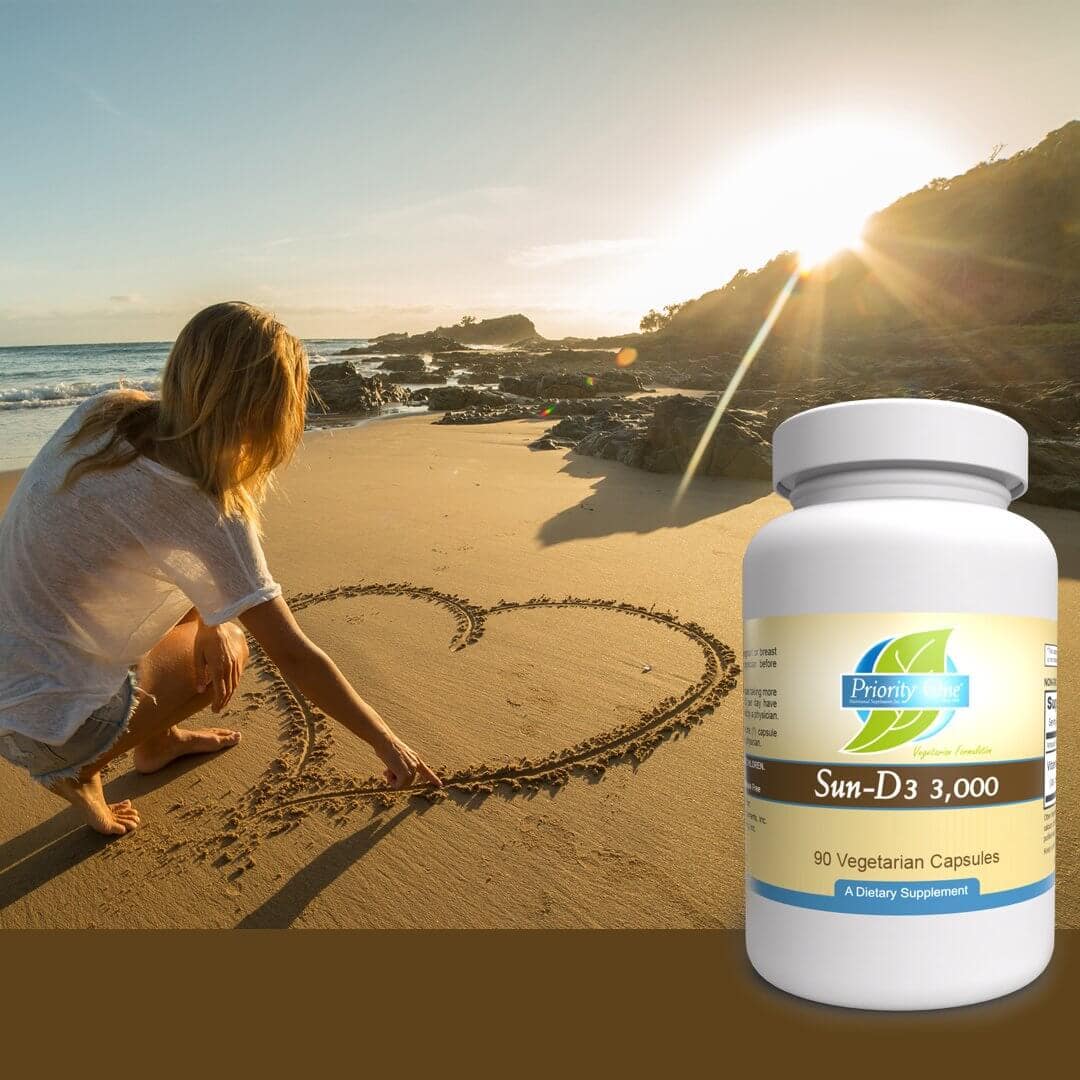
Featured Product: Sun D3 3,000 IU
Sun-D3 | Vitamin D3 Cholecalciferol for Immune Function, Bone Health & Wellness | 3,000 IU or 10,000 IU | 90 Vegetarian Capsules
$25.30
Sun-D3 — High-Potency Vitamin D3 Cholecalciferol for Immune Function, Bone Health & Overall Wellness Sun-D3 delivers Vitamin D3 (cholecalciferol) — the most bioavailable and biologically active form of supplemental Vitamin D — in two potency options: 3,000 IU (75mcg) and… read more

Sun D3 3,000 IU is designed to provide meaningful daily Vitamin D support in a convenient, once-daily vegetarian capsule.
Key Features:
3,000 IU of Vitamin D3 (cholecalciferol) per capsule
Supports bone health and calcium absorption
Helps maintain healthy immune system function
Vegetarian capsules
Ideal for daily maintenance and seasonal wellness support
Sun D3 3,000 IU is well-suited for individuals looking to support everyday Vitamin D intake, especially during fall and winter months or periods of limited sun exposure.
Higher-Potency Option: Sun D3 10,000 IU
For individuals with increased Vitamin D needs, Sun D3 10,000 IU offers a higher-potency option under professional guidance.
Key Features:
10,000 IU of Vitamin D3 per capsule
Designed for short-term or targeted supplementation
Supports bone, immune, and overall wellness
Vegetarian capsules
As with any high-potency supplement, individuals should consult a qualified healthcare professional to determine appropriate dosage and duration.
How to Incorporate Vitamin D Into a Daily Wellness Routine
Supporting healthy Vitamin D levels is most effective when approached consistently. Consider the following tips:
Take Vitamin D with a meal containing dietary fat for optimal absorption
Be consistent with daily supplementation
Pair Vitamin D with complementary nutrients such as calcium and magnesium
Adjust intake seasonally based on sun exposure
Quality You Can Trust
At Priority One Vitamins, every product is formulated with a commitment to quality, purity, and science-backed nutrition. Our Vitamin D supplements are carefully crafted to support daily wellness routines with ingredients you can trust.
Whether you choose Sun D3 3,000 IU for daily maintenance or Sun D3 10,000 IU for higher-potency support, you can feel confident in your choice.